Exploring Spirulina Extract Color for Natural Blue Food Color Applications
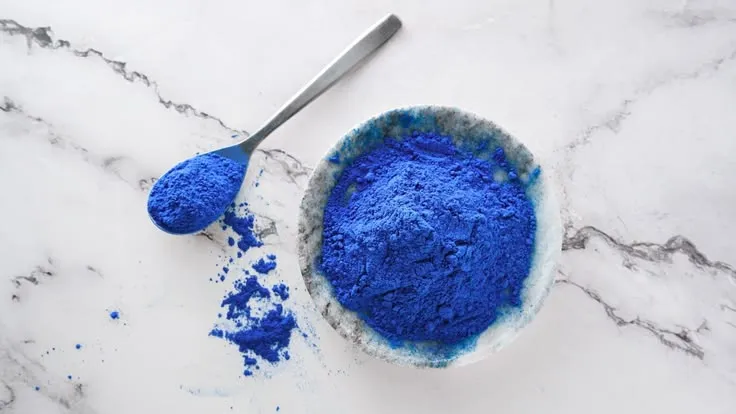
The color blue is a striking color that can be used to create a unique visual identity for food and beverage products. Naturally derived sources are available for manufacturers looking for a natural source of blue that they can use in their product development of colored beverages, candy, desserts and other products. One such blue color that a product developer can think of when developing a blue shade for various formulations is Spirulina Extract Color. Knowing where, how and what the product will be used for and what the desired look is can help manufacturers make a practical decision.
Understanding Spirulina as a Color Source
Pigments from a naturally occurring blue-green microorganism (Spirulina) can be used to add color. One such pigment that is related to its blue color is phycocyanin, and this makes spirulina an interesting color development ingredient.
The final look may be a function of formulation, concentration, processing and other ingredients. Each food product has unique properties, allowing the manufacturer to assess the ingredient directly in the product that he or she is making.
This will provide development teams with a better idea of how the color will be integrated into their specific product idea.
Exploring Blue Color Applications
Blue can be applied in a number of food groups to impart a distinct appearance. Opportunities for blue color may occur during the processing of beverages, confectionery, desserts, ice cream, frostings and selected specialty foods.
The desired color can vary from a pastel blue to a much more pronounced and striking hue. Once the product developer has a visual target in mind prior to starting the formulation trials, they can make comparisons between various concentrations to find a desired result.
The food ingredients around it should also be taken into account, as they could affect the final result of its shade.
Comparing Natural Blue Color Options
When comparing naturally sourced blue ingredients for food applications, manufacturers looking into naturally derived blue shades may want to consider other sources of blue ingredients, such as gardenia blue.
The features of each color source can vary and might be appropriate for different formulations. The developers can check out the targeted food category, the processing conditions, the desired shade and the food format before choosing an option.
Sample testing is particularly useful as it provides the teams the opportunity to compare actual results with one another, rather than making a decision based on a general color description.
Considering the Food Matrix
The formula is an important factor in the development of color. The final appearance may be affected by such factors as acidity, moisture, ingredient composition, and processing conditions.
Manufacturers may undertake small-scale trials, using the same ingredients and production processes to be used during the production of the product. This can assist teams in knowing how the color breaks up and how the color will take shape at the end.
Different concentrations can be used to determine an appropriate balance between the desired visual effect and characteristics of the finished food.
Evaluating Processing Conditions
Food products may be mixed, heated, cooled, frozen or undergo some other production operation. These factors should be taken into account when choosing a color ingredient.
In the trial, the important stages of the production process can be reproduced to observe the color under realistic conditions to achieve the desired results. This will be helpful in developing an application strategy.
Storage can also be taken into account as a part of product development. By viewing the product at the end of the usual storage time, the team can become aware of the visual attributes and develop their formulation strategy.
Selecting a Suitable Ingredient Format
Color ingredients may be supplied as a range of different forms as required for the application and manufacture. Depending upon the equipment, formulation, moisture content, and method desired for incorporation, manufacturers might consider using liquid or powdered forms.
It should be a format that is conducive to the manufacturing process. It is sometimes helpful to test the ingredient in the actual formulation, as it will yield information regarding mixing, dispersion, measurement and general handling.
This can be supplemented by technical discussion with ingredient experts in order to get ideas of what is practically possible for the manufacturer.
Developing a Distinctive Finished Product
Color development is best when used in conjunction with flavor, texture, ingredients, packaging and product positioning. A carefully developed blue tint can enhance the overall appearance and allow for a distinct style to be created.
Testing appropriate color sources early during formulation allows manufacturers to have more time to evaluate potential color sources and to develop a repeatable production process.
Conclusion
Naturally derived blue will provide food manufacturers with interesting options for unique food products, whether in beverages, desserts, confectionery or otherwise. If you take the food matrix, desired shade, processing conditions, food format and application into account, you can make a well-informed choice. Whether you’re looking into blue color formulations for your next product, check out foodrgb.com for some options that align with your product development and take your product to the next level.